Request an
Appointment
Today

Name(Required)
MM slash DD slash YYYY
Best Time to Contact
:

FemiLift — Revive vaginal tissues, improve comfort, invigorate your sex life

Over time, the structure of your vagina can change due to age and childbirth, leading to a variety of symptoms that impact your quality of life, sexual enjoyment and confidence. If the symptoms are bothersome, you have the power to make a change. FemiLift can alleviate symptoms that impact comfort, arousal and enjoyment of sex, including vaginal dryness, laxity (looseness), pain, itching, heaviness and urinary incontinence.


Five Ways FemiLift Could Benefit You

1. FemiLift can alleviate bothersome symptoms

FemiLift uses fractional CO2 laser technology that kickstarts a process in the body to produce more collagen and other strengthening proteins in the vagina. As the tissue remodels itself during the weeks to months after your initial treatment, your comfort and sexual experience will improve. FemiLift increases vaginal tissue thickness, improves elasticity, enhances natural lubrication, and strengthens the pelvic support structure to address laxity, dryness, and stress incontinence.

2. FemiLift can improve sexual comfort

Vaginal walls that have been rebuilt with new collagen, elastin and other proteins are healthier and thicker. That means the vaginal walls begin to function as they did when you were younger, producing better lubrication when you’re sexually aroused.

Once your vagina is well-lubricated with your own natural moisture, sex becomes more comfortable. You won’t have to worry about “drying out” in the middle of intercourse or “drawing back” because sex hurts.

3. FemiLift can reduce incontinence

Although the laser’s energy is directed toward the vaginal walls, all of your surrounding organs benefit from the tissue remodeling process started by FemiLift. That means that your urethral muscles and even your bladder become stronger and more flexible.

If you experience the discomfort and embarrassment of urine leakage and other forms of incontinence, they may improve with FemiLift, too. After FemiLift, you may be able to laugh and cough without worrying about leakage.

4. FemiLift can restore your labia and clitoris

Vaginal atrophy not only makes sex uncomfortable, but it also makes it more difficult to have an orgasm. The labia and clitoris shrink and become less sensitive due to age and health-related hormonal changes.

A series of FemiLift treatments can help restore the size and thickness of your labia and clitoris. You become more sensitive to touch again, which makes orgasms easier and more intense.

5. FemiLift results last

After completing the full treatment plan, you can expect results to last a year or more. You may benefit from an annual FemiLift treatment to maintain maximum arousal and satisfaction.

What to expect

Step 1
Schedule a consultation with one of our providers.

Step 2
Your provider will review your medical history and do a routine pelvic exam, and confirm that you are a good candidate for the procedure

Step 3
Schedule your procedure! Treatment sessions are 4-6 weeks apart and will begin with 3 sessions. Annual treatment is recommended.
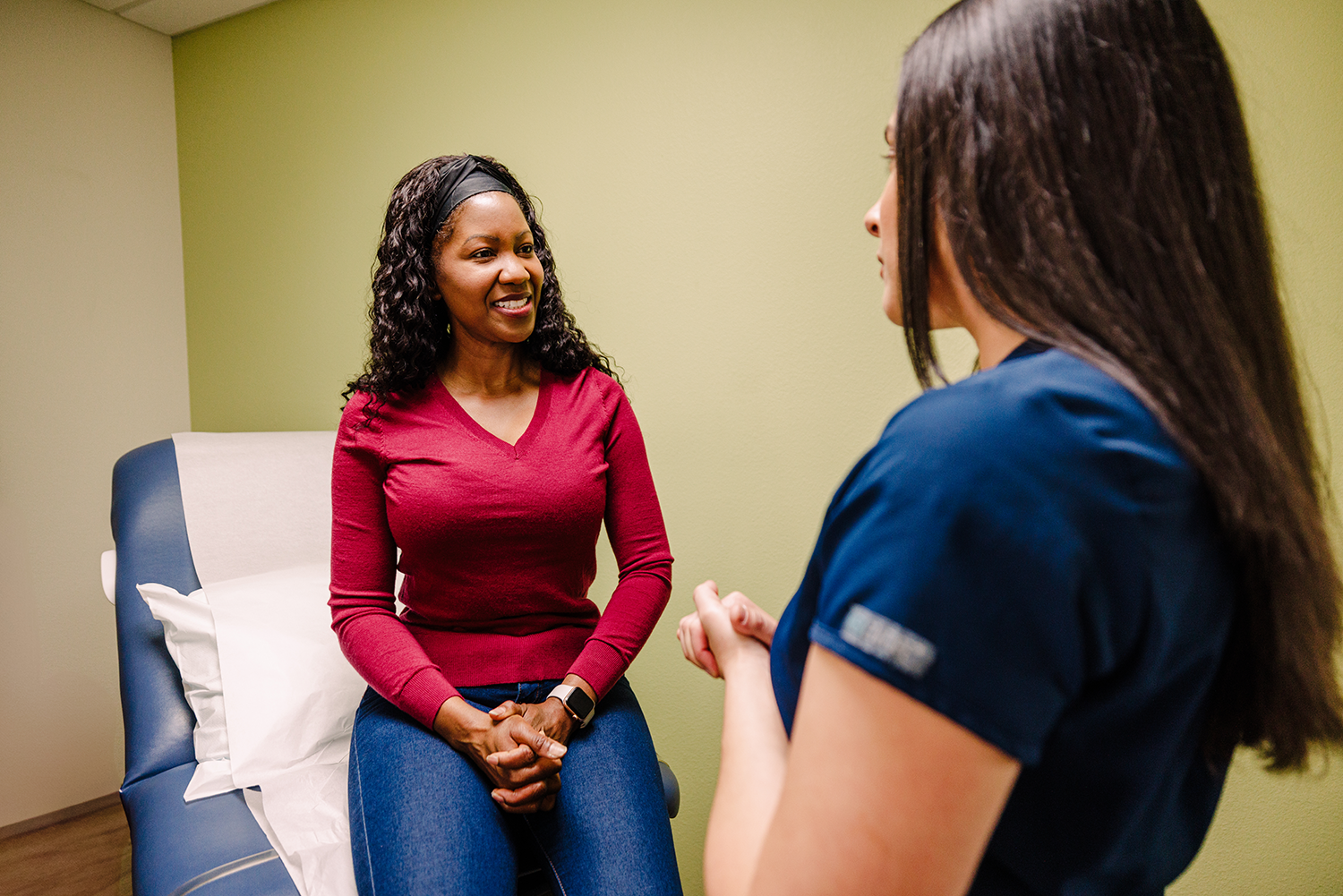

Female patient talking to a female Urology Nevada provider in exam room

Clinical research

Treating stress urinary incontinence
Eighty-five women with stress urinary incontinence (SUI) symptoms were treated intravaginally with Pixel-CO2 laser. SUI severity scores were significantly reduced, with 45.8% of women with no SUI symptoms, 18.8% with mild, 20.8% with moderate and 14.6% with severe SUI symptoms at the 6-month follow-up.

Treating genitourinary syndrome of menopause
Genitourinary syndrome of menopause (GSM) is a chronic, progressive condition caused by decreased estrogen levels, affecting up to 50% or more of postmenopausal women. Symptoms include vaginal dryness, burning, itching, painful intercourse (dyspareunia), urinary urgency and infections. Following three FemiLift treatments, a follow-up at 3.5 months demonstrated significant improvements in physician assessments, as well as significant improvements in all of the patient subjective assessments. Patients reported sustained improvement a year post-treatment.

Frequently asked questions

FemiLift uses fractional CO2 laser technology to create microwounds throughout the vaginal canal. These small tears kickstart your body’s repair systems, triggering a rebuilding process in your vagina and surrounding tissues. As the tissue remodels itself during the weeks to months after your initial treatment, the walls of your vagina become thicker an healthier.

In clinical studies, Femilift has been shown to effectively treat symptoms associated with stress urinary incontinence and genitourinary syndrome of menopause (GSM), including dryness, itching and burning. FemiLift was clinically proven to reduce pain during intercourse, and patients report an overall improvement in sexual function.

Many patients report feeling no pain at all during the treatment, but for some, the treatment has some mild discomfort.

Many patients report feeling no pain post-treatment. For others, post-treatment discomfort is minimal. Women may experience a slight, temporary sensation similar to mild period cramps, which usually lasts a day or two. The vaginal area may feel more sensitive, with potential minor redness or swelling that usually subsides within a few hours to a day. A light, temporary, or watery discharge or spotting may occur for 1–2 days. To ensure proper healing, it is recommended to avoid sexual intercourse and tampon use for 3–5 days following the procedure.

Three treatments spaced about four weeks apart are recommended for optimal results. After initial treatment, one maintenance treatment per year is typically recommended.

Each FemiLift treatment lasts approximately 15–20 minutes. Your appointment will take about 30 minutes in total.

Most patients can sense a more lubricated, tighter vaginal wall immediately. However, the natural repair process will continue to progress during the weeks following the FemiLift treatment. Collagen remodeling takes time and will continue to progress months after treatment. After the third treatment, you should get the maximum benefit.

As long as you follow your provider’s instructions, the results are long-lasting, usually several years. Patients are instructed to perform Kegel exercises at home to expedite and enhance the ongoing tissue remodeling and collagen contraction that occurs after treatment.

You can resume normal activity immediately after the FemiLift treatment, with a couple of exceptions. You should not have vaginal intercourse or use a tampon within three days after treatment (or longer if instructed by your medical provider).

Nearly half of all women who have had vaginal childbirth have some level of concern over vaginal looseness. A worldwide study conducted by OBGYNs revealed that vaginal laxity is the number one concern of women after childbirth, even more so than weight gain and stretch marks. Many other middle-aged women experience urinary incontinence and vaginal laxity as a result of the aging process. With the FemiLift procedure, women have a pain-free, non-surgical answer to vaginal laxity.

Urinary stress incontinence is the loss of bladder control that results in inadvertent urination. It occurs when low-level stress is placed on the bladder, such as laughing, coughing, and exercising. It is common in women who have delivered children vaginally. This leaking occurs when the pelvic floor weakens, causing the urethra to drop. Exercises to restore the pelvic floor, such as Kegels, often are not enough to rejuvenate the pelvic floor. This is where the FemiLift can help. The fractional CO2 laser energy restores the pelvic floor and counteracts the lowered urethra, which in turn fights incontinence.